“Customers remember two things, how fast the food arrived and how smooth the delivery felt.”
In 2026, restaurant growth in India is no longer limited by demand.
It is limited by delivery execution.
As cloud kitchens scale, QSR chains expand across cities, and multi-location brands handle thousands of daily orders, the biggest challenge is no longer cooking food, it’s getting it delivered efficiently.
This is exactly why last-mile delivery software has become a critical system for modern restaurants in India.
Why Last-Mile Delivery Is the Most Critical Stage
The last mile is the most expensive, complex, and sensitive part of the delivery journey.
It involves:
-
Rider availability
-
Traffic conditions
-
Route decisions
-
Real-time communication
-
Customer expectations
Industry facts restaurants can’t ignore:
-
Last-mile delivery accounts for 50–55% of total delivery costs
-
Delivery delays reduce repeat orders by up to 30%
-
1 bad delivery experience can lead to permanent customer churn
This is why restaurants are actively searching for the best last-mile delivery software instead of managing deliveries manually.
What Is Last-Mile Delivery Software?
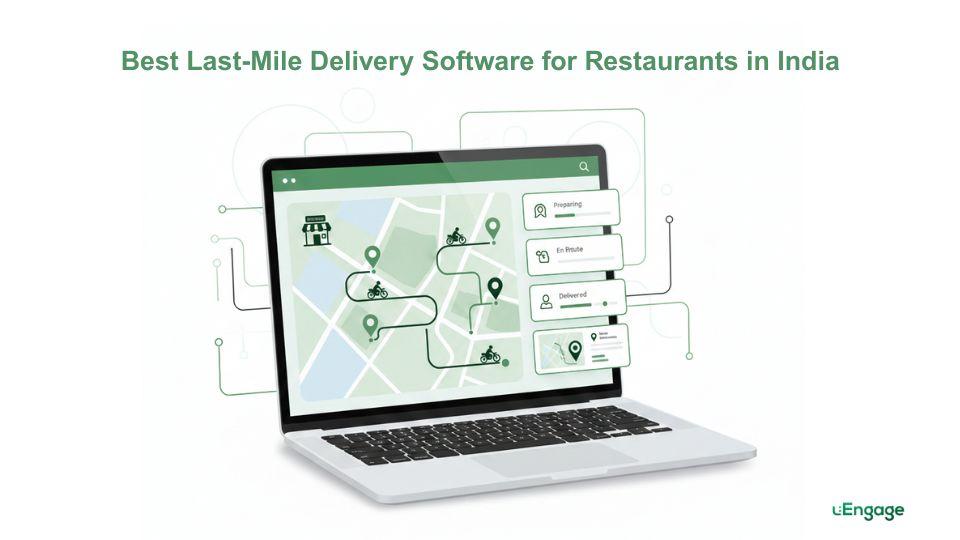
Last-mile delivery software is a centralized system that helps restaurants manage deliveries from the kitchen to the customer’s doorstep.
It allows restaurants to:
-
Assign riders automatically
-
Optimize delivery routes
-
Track deliveries in real time
-
Integrate in-house & 3PL fleets
-
Monitor delivery performance
-
Reduce operational costs
Instead of chaos, restaurants get visibility, control, and predictability.
Why Restaurants in India Need Last-Mile Delivery Software in 2026
In earlier years, restaurants could manage deliveries using:
-
Phone calls
-
WhatsApp groups
-
Manual dispatch
-
Multiple partner dashboards
But this approach breaks instantly at scale.
In 2026, restaurants deal with:
-
Higher order volumes
-
Tighter delivery timelines
-
Lower customer patience
-
Rising fuel & rider costs
This is why adoption of last-mile delivery software is accelerating across Indian F&B brands.
Key Features That Define the Best Last-Mile Delivery Software
Not all delivery tools work for restaurants.
The best last-mile delivery software is built specifically for food businesses.
Here’s what truly matters
1. Automated Rider Assignment
Manual rider assignment is slow and error-prone.
Modern systems automatically assign riders based on:
-
Distance from outlet
-
Rider availability
-
Current workload
Restaurants using automated dispatch report:
-
25–35% reduction in delivery delays
-
Better rider utilization
-
Lower staff dependency
Automation is the backbone of efficient last-mile operations.
2. Route Optimization for Faster Deliveries
Indian cities are unpredictable.
Route optimization helps restaurants:
-
Avoid traffic congestion
-
Reduce fuel consumption
-
Improve delivery ETAs
Optimized routing improves delivery efficiency by 20–25%, especially in metro cities.
This is a core capability of any serious last-mile delivery software.
3. Live Delivery Tracking
Customers expect transparency.
Live delivery tracking:
-
Reduces “Where is my order?” calls
-
Improves customer trust
-
Enhances post-order experience
Restaurants using live tracking see 30% fewer delivery-related support queries.
This makes tracking a non-negotiable feature in 2026.
4. In-House 3PL Integration
As brands scale, they often use:
-
In-house riders
-
Hyperlocal delivery partners
-
City-specific 3PL providers
The best systems unify all fleets into one dashboard, enabling:
-
Consistent tracking
-
Standardized updates
-
Unified reporting
Without this, delivery operations become fragmented.
5. Performance Analytics & Insights
You can’t improve what you don’t measure.
Modern last-mile platforms provide:
-
Delivery success rates
-
Rider performance metrics
-
Delay reasons
-
Cost per delivery
-
City-wise insights
These insights help restaurants reduce costs and improve reliability.
Real-World Use Cases: How Restaurants Use Last-Mile Delivery Software
QSR Chains
-
High-volume peak-hour dispatch
-
Centralized delivery monitoring
-
Faster average delivery times
Cloud Kitchens
-
Multi-brand delivery management
-
Cost optimization across locations
-
Late-night delivery efficiency
Multi-Location Brands
-
City-wise SLA tracking
-
Shared rider fleets
-
Unified delivery standards
These brands don’t rely on manual coordination.
They rely on last-mile delivery software to scale smoothly.
How Last-Mile Delivery Impacts Customer Retention
Delivery is no longer just fulfillment, it’s brand experience.
“Customers forgive bad packaging faster than late delivery.”
A reliable delivery experience leads to:
-
Higher repeat orders
-
Better online ratings
-
Stronger brand trust
Brands with optimized delivery systems report 20–30% higher customer retention.
This is why last-mile optimization directly impacts revenue.
Why 2026 Is the Turning Point for Last-Mile Delivery
In 2026:
-
Delivery costs are under scrutiny
-
Competition is intense
-
Customers expect precision
-
Operational efficiency defines margins
Restaurants that continue with manual delivery processes will struggle to grow.
Those that invest in the best last-mile delivery software will:
-
Reduce chaos
-
Improve consistency
-
Control costs
-
Scale confidently
How uEngage Flash Supports Last-Mile Delivery at Scale
uEngage Flash is built specifically for restaurant delivery challenges in India.
It enables brands to:
-
Automate rider assignment
-
Optimize delivery routes
-
Track deliveries in real time
-
Integrate multiple 3PL partners
-
Monitor performance across outlets
Flash acts as a centralized last-mile delivery command center for restaurants.
Final Takeaway
In 2026, restaurants will be judged not just by food quality, but by delivery reliability.
The brands that win will be the ones that:
-
Control their last mile
-
Optimize routes & riders
-
Deliver consistently
-
Build customer trust
Investing in the best last-mile delivery software is no longer optional, it’s essential for sustainable restaurant growth in India.