When restaurants are small, delivery feels manageable.
A few riders.
A few orders.
Some phone calls.
But the moment a brand scales, everything breaks.
Late deliveries.
Idle riders.
Overloaded shifts.
Rising costs.
Angry customers.
In 2026, most restaurant delivery problems are not caused by demand.
They’re caused by poor fleet control.
“Scaling delivery without systems is like running a kitchen without a POS.”
This is exactly why fleet management software for restaurants has become a critical growth requirement, not an optional add-on.
The Reality: Restaurant Fleets Are Not Built to Scale by Default
Most restaurants expand delivery without upgrading systems.
They add:
-
More riders
-
More orders
-
More locations
But keep:
-
Manual assignment
-
WhatsApp coordination
-
No performance tracking
That combination is guaranteed to fail.
Industry insight
Restaurants that scale delivery without structured fleet management see 20–30% higher delivery costs within the first year.
Why Restaurant Fleets Fail as They Grow
Let’s break down the real reasons
1. No Visibility Across Riders
As fleets grow, restaurants lose visibility.
Managers don’t know:
-
Who is available
-
Who is overloaded
-
Who is delayed
-
Who is underperforming
Without visibility, decisions become reactive.
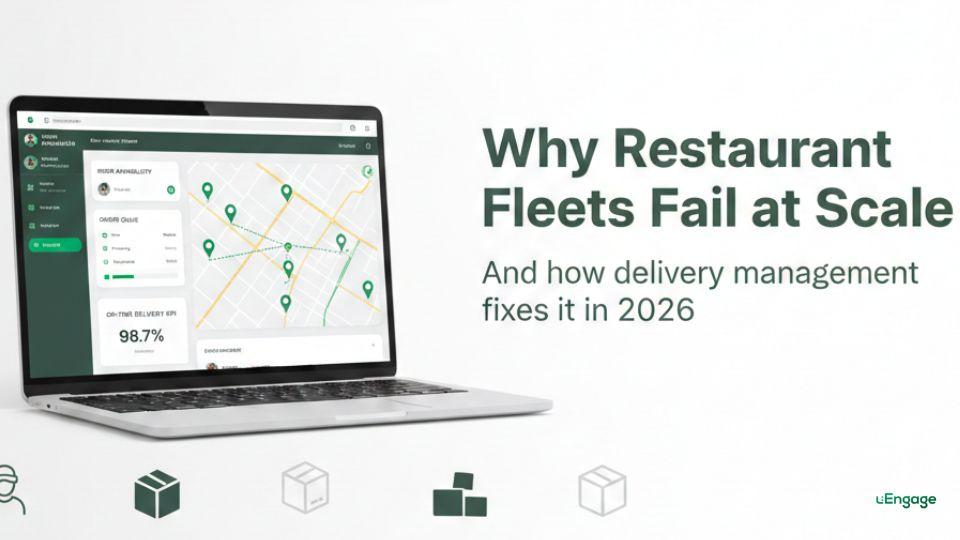
This is where fleet management software for restaurants changes the game by providing real-time rider status and performance data.
2. Manual Rider Assignment Doesn’t Scale
Manual dispatch works when:
-
Orders are few
-
Locations are single
-
Pressure is low
At scale, it causes:
-
Wrong rider allocation
-
Longer delivery times
-
Increased fuel costs
-
Rider burnout
“If humans are assigning every delivery, scale will always hurt.”
Automation is no longer optional.
3. No Route Optimization = Higher Costs
Most restaurant fleets still operate on static routes or gut instinct.
But traffic, order density, and peak hours change every day.
Restaurants using route optimization reduce delivery time by 20–25% and fuel costs by 15–20%.
This is why modern delivery management software must include intelligent routing as a core feature.
4. Fleet Performance Is Never Measured
Most restaurants can’t answer basic questions like:
-
Which rider delivers fastest?
-
Who causes the most delays?
-
Which shifts are inefficient?
Without data, improvement is impossible.
A proper fleet management software for restaurants tracks:
-
Delivery time per rider
-
On-time percentage
-
Distance vs orders
-
Peak-hour performance
5. In-House & 3PL Fleets Create Chaos Together
As brands scale, they often use:
-
In-house riders
-
Multiple 3PL partners
But without a unified system:
-
Orders get mismanaged
-
SLAs aren’t tracked
-
Accountability disappears
This is why unified delivery management is becoming essential in 2026.
The Hidden Cost of Fleet Chaos
Fleet issues don’t just affect operations, they affect revenue.
Consider this:
-
60% of delivery complaints are fleet-related
-
Late deliveries reduce repeat orders by up to 25%
-
Support tickets spike due to “Where is my order?”
“Customers don’t blame the rider.
They blame the restaurant.”
What Scalable Restaurant Fleets Do Differently in 2026
Smart brands don’t hire more people to fix delivery.
They fix systems.
Here’s how
1. They Use Centralised Fleet Management Software
High-growth restaurants rely on fleet management software for restaurants that:
-
Shows all riders in one dashboard
-
Tracks availability and workload
-
Automates dispatch
Centralisation removes guesswork.
2. They Automate Dispatch & Assignment
Automation ensures:
-
Balanced rider load
-
Faster order assignment
-
Consistent delivery times
This directly improves efficiency during peak hours.
3. They Use Real-Time Delivery Tracking
Real-time tracking:
-
Improves customer trust
-
Reduces support calls
-
Keeps teams informed
For customers, transparency matters more than speed.
4. They Combine Fleet Route Optimization
When fleet management works with route optimization software:
-
Delivery times reduce
-
Fuel costs drop
-
Rider efficiency improves
This is where delivery becomes profitable, not painful.
5. They Monitor Fleet Performance Continuously
Scalable brands track:
-
Rider KPIs
-
Delivery SLAs
-
Peak-hour performance
Data-driven fleet decisions beat gut instinct every time.
Real-World Example
A multi-location restaurant brand faced:
-
Increasing delivery delays
-
Rider dissatisfaction
-
High operational stress
After implementing structured delivery management:
-
Delivery efficiency improved
-
Rider workload balanced
-
Customer complaints dropped
-
Costs became predictable
The difference wasn’t more riders.
It was better fleet management.
How Delivery Management Fixes Fleet Failures
A modern delivery management software brings everything together:
-
Fleet visibility
-
Automated dispatch
-
Route optimization
-
Real-time tracking
-
Unified partner control
This turns delivery from chaos into a controlled operation.
Why uEngage Flash Is Built for Scaled Fleets
uEngage Flash is designed specifically for restaurant delivery complexity.
With Flash, brands get:
-
Unified delivery dashboard
-
Smart routing & dispatch
-
Real-time delivery tracking
-
Multi-location scalability
Flash helps restaurants grow delivery without losing control.
The Big Shift Happening in 2026
Delivery is no longer just logistics.
It’s a brand experience.
“In 2026, restaurants don’t compete on speed alone.
They compete on reliability.”
And reliability comes from strong delivery systems.
Final Thoughts
Restaurant fleets don’t fail because teams are inefficient.
They fail because systems don’t scale.
In 2026, the winning brands are those that:
-
Control fleet performance
-
Automate delivery operations
-
Reduce cost leakage
-
Deliver consistently
And that starts with the right fleet management software for restaurants.