Food delivery has transformed the way restaurants operate. What once involved a phone call and a delivery boy now requires sophisticated coordination between orders, riders, locations, and customers.
Today, restaurants handle delivery through multiple channels, mobile apps, websites, WhatsApp ordering, and aggregator platforms. Managing all of these simultaneously can quickly become complex without the right systems.
This is where food delivery software comes into play.
Modern restaurants rely on delivery management systems and automation tools to streamline dispatch, assign riders, track deliveries, and ensure customers receive their orders on time.
In this article, we will explain how food delivery software works, the problems it solves for restaurants, and why it has become an essential technology for restaurants operating at scale.
What is Food Delivery Software?
Food delivery software is a system that helps restaurants manage delivery operations by automating order dispatch, rider assignment, d
elivery tracking, and route optimisation. It allows restaurants to streamline delivery workflows and handle large order volumes efficiently.
Why Delivery Operations Become Complex for Restaurants
As delivery demand grows, restaurant operations become significantly more complicated.
Instead of handling a few orders per hour, restaurants may need to manage dozens or even hundreds of deliveries daily.
According to a report by Statista, the global online food delivery market is expected to surpass $500 billion by 2030, with millions of daily orders processed through digital platforms.
For restaurants, this growth introduces several operational challenges:
Order Management Across Multiple Channels
Restaurants today receive orders from:
-
their own website
-
mobile apps
-
WhatsApp ordering
-
delivery aggregators
-
QR code ordering systems
Without centralized food delivery software, tracking these orders becomes difficult.
Rider Assignment and Dispatch
Manually assigning delivery partners can cause delays and confusion, especially during peak hours.
Delivery Tracking
Customers expect real-time tracking updates. Without proper delivery tracking software, restaurants struggle to provide transparency.
Route Optimization
Inefficient delivery routes increase delivery time and fuel costs.
These operational challenges highlight why modern restaurants rely on food delivery software to manage delivery workflows efficiently.
What is Food Delivery Software?
Food delivery software is a technology platform that helps restaurants manage their entire delivery operation from a centralized system.
It allows restaurants to automate tasks such as:
-
order dispatch
-
rider assignment
-
route planning
-
delivery tracking
-
performance analytics
In simple terms, food delivery software acts as the operational backbone that connects orders, riders, and customers.
Most modern restaurant delivery systems also integrate with:
-
POS systems
-
CRM platforms
-
online ordering websites
-
restaurant mobile apps
This integration enables restaurants to run delivery operations smoothly without relying on manual coordination.
Key Features of Food Delivery Software
To understand how food delivery operations run at scale, it is important to look at the core capabilities of modern food delivery software.
Centralized Order Management
Restaurants receive orders from multiple sources, but food delivery software consolidates them into one dashboard.
This ensures restaurant staff can manage all delivery orders efficiently.
Automated Rider Assignment
Instead of manually calling riders, the system automatically assigns delivery partners based on location, availability, and order priority.
This significantly reduces dispatch time.
Real-Time Delivery Tracking
Delivery tracking software enables restaurants and customers to monitor order progress in real time.
According to McKinsey, real-time tracking improves customer satisfaction and reduces delivery complaints.
Route Optimization
Advanced delivery management systems recommend the most efficient route for riders, reducing delivery time and fuel consumption.
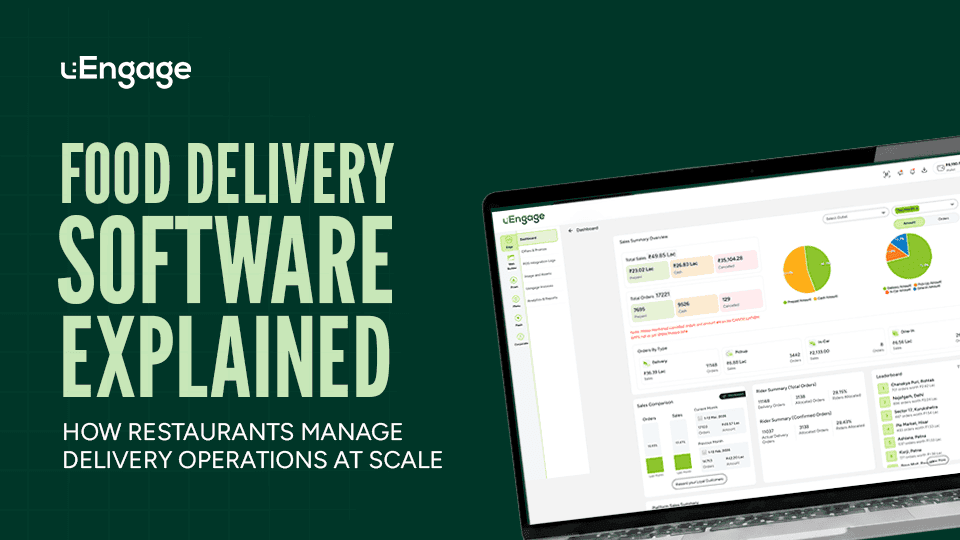
Delivery Performance Analytics
Restaurant operators can track key metrics such as:
-
delivery time
-
order fulfillment rate
-
rider efficiency
-
delivery cost per order
These insights help restaurants improve operational performance.
How Restaurants Use Food Delivery Software in Daily Operations
In a modern restaurant setup, delivery operations are highly automated.
Here is how a typical delivery process works using food delivery software.
Order Placement
Customers place orders through:
-
restaurant website
-
mobile app
-
WhatsApp ordering
-
online marketplace platforms
Order Dispatch
The system automatically processes the order and assigns it for delivery.
Rider Assignment
The delivery management system allocates the most suitable rider based on location and availability.
Delivery Tracking
Both restaurant staff and customers receive live tracking updates.
Order Completion
Once the order is delivered, the system records delivery data for analytics.
This streamlined workflow ensures restaurants can handle large delivery volumes without operational chaos.
Key Capabilities of Food Delivery Software
| Feature | What It Does |
| Order Management | Consolidates orders from multiple channels |
| Rider Assignment | Automatically assigns delivery partners |
| Delivery Tracking | Provides real-time order tracking |
| Route Optimisation | Route Optimisation |
| Analytics | Tracks delivery performance metrics |
Why Restaurants Need Food Delivery Software for Growth
Restaurants that rely on manual delivery coordination often struggle to scale operations.
By adopting food delivery software, restaurants gain several advantages:
Faster Deliveries
Automation reduces dispatch delays and improves delivery efficiency.
Better Customer Experience
Real-time tracking and timely delivery enhance customer satisfaction.
Lower Operational Costs
Optimized delivery routes reduce fuel consumption and rider idle time.
Higher Order Volumes
Restaurants can process significantly more orders without increasing staff.
According to industry research, restaurants using automated delivery management systems can improve operational efficiency by 30–40%.
How Modern Restaurants Manage Delivery at Scale
As delivery demand increases, restaurants must rely on systems rather than manual processes.
Platforms like uEngage Flash provide restaurants with delivery management capabilities such as:
-
automated order dispatch
-
rider management
-
delivery tracking
-
operational analytics
With these systems in place, restaurants can scale delivery operations while maintaining speed, accuracy, and customer satisfaction.
The Future of Restaurant Delivery Operations
The future of food delivery will rely heavily on technology and automation.
Industry experts predict that delivery management will continue evolving through:
-
AI-driven dispatch systems
-
predictive delivery analytics
-
automated route optimization
-
integrated restaurant tech stacks
Restaurants that adopt advanced food delivery software early will be better positioned to manage growing delivery demand and deliver superior customer experiences.