
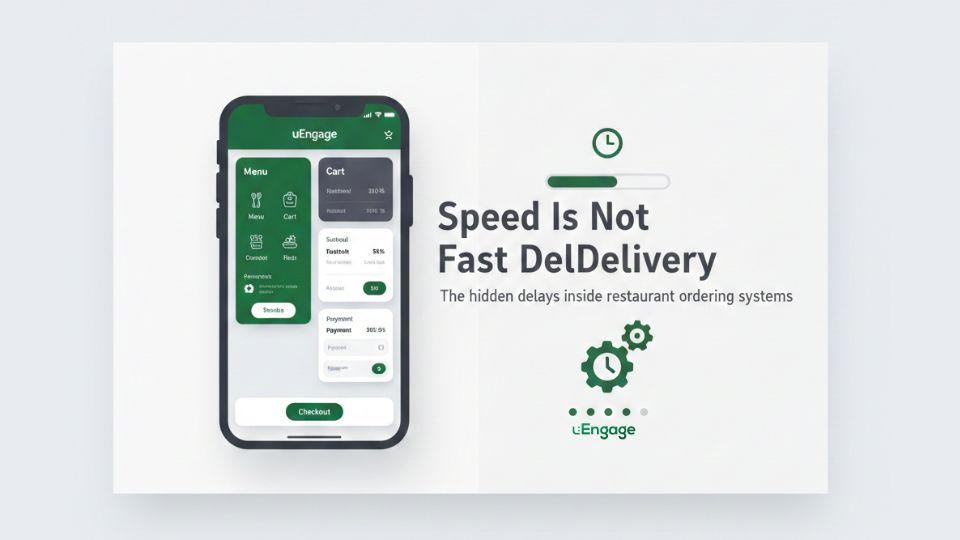
Restaurants love talking about speed.
Fast delivery.
Quick prep.
30-minute promises.
But here’s the uncomfortable truth in 2026:
Most delivery delays don’t start on the road.
They start inside the ordering system.
Customers don’t cancel because riders are slow.
They cancel because ordering feels slow, confusing, and unreliable.
This is why having a fast rider network is no longer enough.
What restaurants actually need is a smart restaurant online ordering system that removes friction before food even reaches the kitchen.
The Biggest Myth in Food Delivery: Speed = Fast Delivery
When restaurants say, “We need faster delivery,” they usually mean:
-
Faster riders
-
More delivery partners
-
Better routes
But customers experience speed very differently.
For them, speed starts when they:
-
Open the ordering link
-
Browse the menu
-
Add items to cart
-
Reach checkout
If any of these stages feel slow, delivery already feels late, even before dispatch.
Industry insight
Nearly 60–70% of food orders are abandoned before checkout, long before delivery even begins.
That’s not a delivery problem.
That’s an ordering system problem.
Where Delivery Actually Gets Delayed (Before the Kitchen Even Sees the Order)
Let’s break down the hidden delays restaurants rarely notice
1. Slow Loading Ordering Pages
If your ordering system:
-
Takes more than 3 seconds to load
-
Struggles on mobile networks
-
Freezes during peak hours
Customers lose patience instantly.
A delay of just 1 second in page load time can reduce conversions by 7–10%.
A modern restaurant online ordering system must be built for mobile speed first, not desktop convenience.
2. Menu Confusion Slows Decision-Making
Customers don’t read menus.
They scan.
Hidden delays happen when:
-
Menu categories are cluttered
-
Prices aren’t clear
-
Add-ons are confusing
-
Items lack visual clarity
Customers pause, hesitate, and eventually quit.
“Confusion is the slowest form of delay.”
Smart ordering systems reduce decision time, not just delivery time.
3. Cart & Checkout Friction
This is where most orders die.
Common checkout delays include:
-
Forced sign-ups
-
Multiple screens
-
Limited payment options
-
OTP issues
-
Unclear taxes or fees
Over 55% of abandoned orders happen during checkout.
A high-performing restaurant online ordering system keeps checkout brutally simple.
4. Poor Mobile UX Is the Silent Killer
In 2026, more than 80% of restaurant orders happen on mobile.
Yet many ordering systems:
-
Are desktop-first
-
Have tiny buttons
-
Break on low bandwidth
-
Feel “heavy”
Mobile friction = instant exits.
Fast delivery cannot compensate for bad mobile ordering.
5. No Real-Time Feedback to the Customer
Customers want reassurance.
Hidden delays appear when:
-
There’s no loading feedback
-
No progress indicator
-
No confirmation clarity
Uncertainty feels like slowness.
This is why modern restaurant online ordering systems use clear progress cues and instant confirmations.
Speed vs Flow: What Actually Feels Fast to Customers
Customers don’t care how fast your backend is.
They care how smooth the experience feels.
What feels fast:
-
Instant menu load
-
Clear bestsellers
-
One-tap add to cart
-
Guest checkout
-
Familiar payment methods
Restaurants that optimise ordering flow see 15–25% higher order completion rates, without changing delivery time.
Real Restaurant Scenario
A growing QSR brand had:
-
Multiple delivery partners
-
Decent rider speed
-
Strong marketing traffic
Yet orders weren’t converting.
The issue?
-
Slow ordering pages
-
Confusing menu flow
-
Drop-offs at checkout
After upgrading their ordering system:
-
Abandonment dropped
-
Orders increased
-
Customer complaints reduced
Delivery time stayed the same.
But orders felt faster.
Why Restaurants Mistake Delivery Problems for Ordering Problems
Because ordering friction is invisible.
Restaurants track:
-
Prep time
-
Rider time
-
Delivery SLAs
But they rarely track:
-
Time spent browsing menu
-
Drop-off points
-
Checkout hesitation
A smart restaurant online ordering system exposes these hidden delays, and fixes them.
What Smart Ordering Systems Do Differently in 2026
Winning brands focus on ordering velocity, not just delivery speed.
1. Speed-First Architecture
Modern ordering systems are:
-
Lightweight
-
Mobile-optimised
-
Peak-load ready
This ensures consistent performance even during rush hours.
2. Menu Design That Reduces Thinking Time
Smart systems:
-
Highlight bestsellers
-
Group items logically
-
Simplify choices
Less thinking = faster ordering.
3. Frictionless Checkout by Design
The best restaurant online ordering systems:
-
Support guest checkout
-
Offer UPI, cards, wallets
-
Minimise form fields
Checkout becomes a formality, not a hurdle.
4. Built for Real-World Internet Conditions
In India especially, ordering systems must work on:
-
Low bandwidth
-
Older devices
-
Unstable networks
Speed is about resilience, not just tech specs.
Why This Matters More in 2026 Than Ever
Customers are impatient.
Choices are unlimited.
Switching is effortless.
“In 2026, customers don’t wait for slow experiences.
They switch.”
If your ordering system creates friction, delivery speed won’t save you.
How uEngage Edge Fixes Hidden Ordering Delays
uEngage Edge is built with one clear focus:
Remove friction before it becomes delay.
Edge helps restaurants with:
-
Fast, mobile-first ordering websites
-
Clean menu flow
-
Simple checkout experience
-
Reliable performance during peak hours
Edge ensures orders reach the kitchen faster by design, not by pressure.
Final Thoughts
Fast delivery is important.
But it’s not enough.
In 2026, restaurants win by:
-
Reducing ordering friction
-
Designing for speed perception
-
Fixing hidden delays
Because the fastest delivery in the world can’t save a slow ordering experience.
“Delivery speed matters.
Ordering flow decides everything.”
And that’s why the future belongs to restaurants with smarter restaurant online ordering systems.