
Introduction: A New Challenge for Restaurant Kitchens
Over the past few weeks, the LPG shortage in India today has quietly started affecting restaurant kitchens across several cities. For customers, the disruption is almost invisible. Orders still arrive, restaurants remain open, and kitchens continue to operate.
But behind the scenes, many restaurant operators are dealing with an unexpected operational challenge: inconsistent access to commercial LPG cylinders.
Restaurant kitchens depend heavily on LPG for daily cooking operations. From grilling and frying to bulk preparation during peak hours, LPG is the backbone of commercial kitchen workflows. When supply becomes unpredictable, kitchens must adjust quickly to maintain service consistency.
The current LPG shortage in India is therefore not just a fuel problem. It is becoming an operational test for restaurant owners who must continue serving customers while managing kitchen efficiency, delivery timelines, and profitability.
Quick Answer: How Restaurants Are Managing the LPG Shortage in India Today
The LPG shortage in India today is forcing restaurants to rethink how their kitchens operate. Since commercial kitchens rely heavily on LPG cylinders, supply disruptions can slow down food preparation and affect delivery timelines.
To manage the situation, many restaurants are simplifying menus, adjusting cooking workflows, and exploring alternative cooking equipment such as electric or induction systems.
At the same time, restaurant owners are focusing on improving operational efficiency. Many brands are strengthening their direct ordering channels so they can better control order flow, communicate delays to customers, and maintain profitability during operational disruptions.
Technology platforms such as uEngage help restaurants launch their own ordering apps and manage delivery operations more efficiently, enabling them to maintain customer experience even when kitchen fuel supply becomes uncertain.
Why Is There an LPG Shortage in India Today?
The LPG shortage in India today is being linked to a combination of supply chain pressures and rising demand for commercial cylinders.
India imports a large portion of its LPG supply, which means global disruptions in energy supply, shipping delays, and logistical bottlenecks can affect domestic availability. When these pressures combine with growing demand from households and businesses, supply gaps can appear.
For restaurants, the impact becomes visible almost immediately. Commercial kitchens require a steady flow of LPG cylinders to maintain high-volume cooking operations, and even short disruptions can lead to restaurant operational disruptions.
Why Restaurants Are the Most Affected by LPG Shortages
Restaurants are among the first businesses to feel the effects of a commercial LPG shortage in India.
Unlike households, restaurants consume LPG at a much higher rate. A mid-sized restaurant kitchen can use multiple cylinders every day during peak hours.
When supply becomes uncertain, kitchens must adjust their operations quickly. Cooking speeds may slow down, certain menu items may be temporarily removed, and delivery timelines may extend.
These operational adjustments can sometimes lead to restaurant delivery delays, especially during busy meal periods when kitchens are already operating at full capacity.
Restaurant owners therefore need to manage both kitchen efficiency and customer expectations at the same time.
Many restaurants are strengthening their direct online ordering systems to manage operations more efficiently.
How Restaurants Are Managing Kitchen Operations During the LPG Shortage
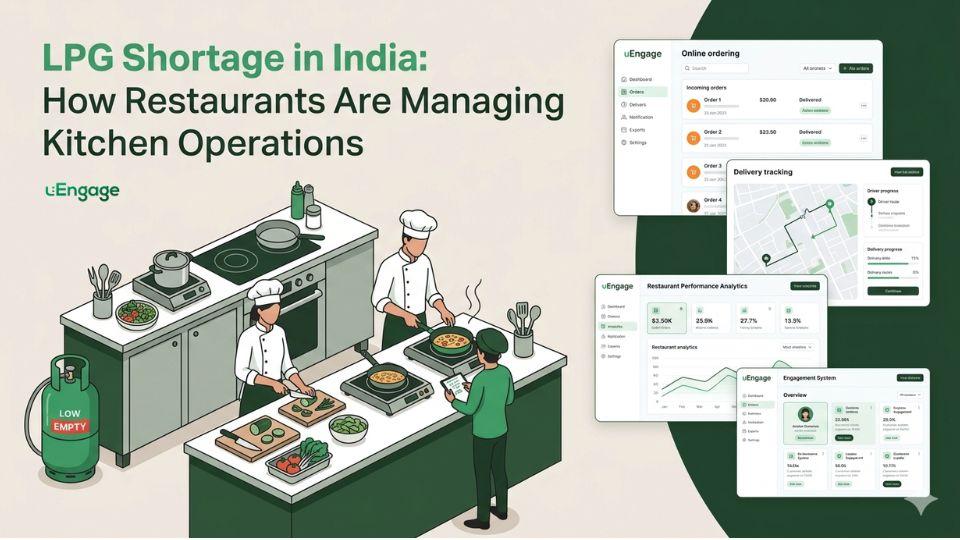
The LPG shortage in India today (Checklist for LPG Shortage Survival for Restaurants in India) is pushing many restaurant operators to explore new ways of maintaining kitchen productivity.
One of the most common adjustments is menu optimization. Restaurants are prioritizing dishes that require shorter cooking cycles so that kitchens can maintain output while conserving fuel.
Some restaurants are also experimenting with hybrid kitchen setups that combine LPG with electric or induction cooking equipment. While LPG remains the primary fuel source for most commercial kitchens, these alternatives help reduce dependency during supply disruptions.
Restaurants are also improving kitchen workflows, reorganising preparation processes, and focusing on delivery-friendly menu items that can be prepared more efficiently.
These changes show how quickly the restaurant industry adapts when faced with restaurant kitchen fuel shortage situations.
How Technology Is Helping Restaurants Handle Operational Disruptions
Operational challenges such as the LPG shortage in India highlight the importance of having systems that help restaurants adapt quickly.
Modern restaurant technology platforms allow brands to manage ordering, delivery logistics, and customer engagement more efficiently. These tools give restaurant owners greater visibility into their operations and help them coordinate kitchens and delivery workflows more effectively.
Platforms like uEngage enable restaurants to launch their own branded ordering apps and websites, helping them manage order flow more efficiently and reduce dependence on aggregator platforms. By increasing direct orders, restaurants can reduce dependency on aggregator commissions and maintain stronger control over their customer relationships.
During operational disruptions, this level of control helps restaurants manage order flow, communicate delivery timelines clearly, and maintain customer trust.
Restaurant Industry Reality Check
India’s food service industry continues to expand rapidly.
Industry estimates suggest that the market could cross Rs.5–6 trillion in value in the coming years, driven by the growth of online food delivery and cloud kitchens.
A typical restaurant kitchen can consume three to five LPG cylinders per day during peak operations. At the same time, customers now expect food delivery within 30 to 40 minutes, leaving very little room for operational delays.
These realities explain why events like the LPG shortage in India today can quickly impact kitchen productivity and delivery timelines.
Industry Perspective: Why Operational Resilience Matters
Many restaurant operators believe that supply disruptions are becoming more common in the food service industry.
As one restaurant operations consultant explains:
“Restaurants today operate in a highly dynamic environment. Whether it is supply chain issues, ingredient costs, or fuel availability, disruptions are becoming part of the business reality. The brands that adapt quickly are the ones that continue to grow.”
This is why many restaurant owners are now focusing on restaurant operations management systems that help them maintain operational flexibility and respond quickly when challenges arise.
What the LPG Shortage in India Means for Restaurant Operations
The current LPG shortage in India may be temporary, but it is already encouraging restaurant owners to rethink how their businesses operate.
Fuel availability, ingredient costs, delivery logistics, and customer expectations are all interconnected parts of the restaurant ecosystem.
Restaurants that build flexible kitchen operations and strengthen their direct relationship with customers are better positioned to handle unexpected disruptions.
In many ways, the situation is encouraging restaurant owners to focus more on efficiency, operational visibility, and long-term sustainability.
Key Takeaways: LPG Shortage in India Today
The LPG shortage in India today is creating real operational challenges for restaurant kitchens across multiple cities.
Restaurants are adapting by optimizing menus, adjusting kitchen workflows, and exploring alternative cooking setups.
More importantly, many restaurant owners are strengthening their operational systems and focusing on direct customer engagement to maintain profitability during disruptions.
The restaurants that continue to operate smoothly during uncertain conditions are often those that invest in operational flexibility and technology-driven systems.