“Should I build a mobile app for my restaurant?”
It’s a question most restaurant owners ask, usually at the same moment.
Orders are growing.
Customers are returning.
But something still feels missing.
Because while orders increase, control doesn’t.
You don’t fully control customer experience.
You don’t own customer data.
And you don’t build long-term relationships.
Many restaurants start by setting up a restaurant online ordering system to capture direct orders before launching their own app.
What Is a Mobile App for My Restaurant?
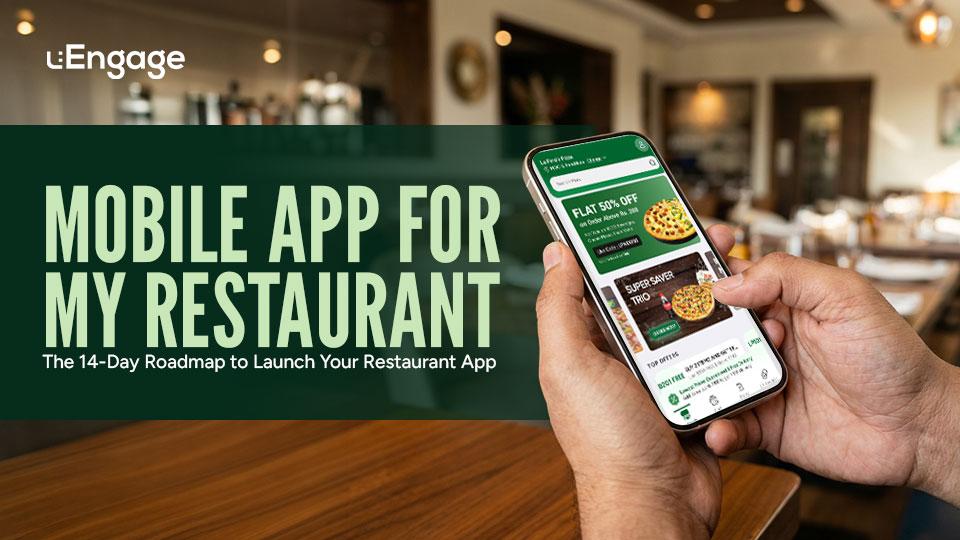
A mobile app for my restaurant is a branded ordering platform that allows customers to:
-
place orders directly
-
make secure payments
-
track deliveries
-
receive offers and updates
Unlike third-party platforms, it gives restaurants:
-
ownership of customer data
-
direct customer relationships
-
full control over the ordering experience
In simple terms, this is often built on top of a online ordering platform for restaurants that powers the entire ordering experience.
How to launch a mobile app for my restaurant
-
Define ordering and delivery model
-
Set up online ordering system
-
Integrate payment and delivery
-
Test ordering flow
-
Launch and promote app
Why Restaurants Are Moving Toward Direct Ordering Apps
The restaurant industry is shifting from platform dependency → ownership.
Key trends:
-
Over 65% of online food orders now happen on mobile
-
Restaurants with direct ordering apps see 25–40% higher repeat rates
-
Third-party commissions can reduce margins by 15–30% per order
This is why more brands are investing in a mobile app for my restaurant strategy.
Not just to take orders.
But to build predictable growth systems.
The Real Problem Most Restaurants Face
Here’s the truth most blogs won’t tell you:
Restaurants don’t struggle with building apps.
They struggle with making them work.
Because without the right system:
- a restaurant online ordering system (Edge)
- a delivery management system for restaurants (Flash)
- a restaurant CRM software (Prism)
A mobile app without a system is just another digital asset.
A mobile app with a system becomes a growth engine.
How a Mobile App for My Restaurant Actually Works
Behind a simple customer experience lies a structured system.
Customer-side flow:
-
Open app
-
Browse menu
-
Place order
-
Make payment
-
Track delivery
Backend system flow:
-
order syncs with kitchen
-
delivery gets assigned
-
notifications are triggered
-
customer data is stored
This is where most restaurants underestimate complexity.
Mobile App vs Third-Party Platforms
| Factor | Restaurant App | Third-Party Platforms |
|---|---|---|
| Customer Data | Fully owned | Platform controlled |
| Brand Experience | Customised | Limited |
| Customer Loyalty | Direct | Weak |
| Margins | Higher | Reduced due to commissions |
The 14-Day Roadmap to Launch Your Restaurant App
Launching a mobile app for my restaurant doesn’t require months, if done correctly.
Day 1–3: Define Your Ordering Strategy
-
What will customers order?
-
Delivery or pickup?
-
Which areas will you serve?
-
What will your pricing strategy be?
Day 4–6: Design the Ordering Experience
Focus on simplicity:
-
fast loading menus
-
easy navigation
-
quick checkout
Because every extra click reduces conversions.
Day 7–9: Set Up Your System Layer
This is the most critical step.
You need:
-
restaurant online ordering system
-
delivery management system for restaurants
-
restaurant CRM software
This is where platforms like uEngage Edge simplify the entire process by connecting all systems into one.
Day 10–12: Test Real-World Scenarios
-
order placement
-
payment failures
-
delivery delays
-
notifications
Because real-world issues don’t appear in theory, they appear in operations.
Day 13–14: Launch and Drive Adoption
-
announce via WhatsApp / SMS
-
offer first-order incentives
-
promote across channels
Your mobile app for my restaurant is now live, but the real journey starts here.
Do restaurants really need their own mobile app?
Restaurants that want to grow direct orders, retain customers, and reduce dependency on third-party platforms benefit significantly from having their own mobile app.
What Makes a Restaurant App Actually Successful
Most apps fail because they focus only on launch, not usage.
Successful apps focus on:
1. Repeat Orders
Push notifications offers drive retention.
2. Seamless Ordering
Faster than aggregator experience.
3. Integrated Delivery
Connected delivery management system ensures smooth operations.
4. Customer Data Utilisation
Understanding behaviour → improving conversions.
The System Behind High-Growth Restaurant Apps
A mobile app alone does not create growth.
Growth comes from a connected system.
A modern restaurant app connects:
- a restaurant online ordering system (Edge)
- a delivery management system for restaurants (Flash)
- a restaurant CRM software (Prism)
Platforms like uEngage Edge bring these together, enabling restaurants to manage operations, customers, and growth from one place.
This is what separates:
Restaurants that “have an app”
vs
Restaurants that “grow through their app”
What Restaurants Should Consider Before Launching
Before launching a mobile app for my restaurant, ask:
-
Is the ordering experience simple?
-
Are delivery operations efficient?
-
Can I track customer behaviour?
-
Are all systems connected?
Because without integration, scale becomes chaos.
Why Mobile Apps Are Becoming a Growth Channel
Earlier:
App = ordering tool
Now:
App = growth channel
Because it enables:
-
direct communication
-
repeat ordering
-
customer retention
-
brand ownership
This shift is redefining how modern restaurants grow.
Final Thought
Customers see:
Open app → place order → receive delivery
Restaurants manage:
Ordering → operations → delivery → engagement → retention
A mobile app for my restaurant is not just about digital presence.
It’s about building a system that gives your restaurant:
-
control
-
visibility
-
scalability
And in today’s restaurant landscape, that system is what separates growth from dependency.