The Indian restaurant industry is changing faster than ever.
Customers expect speed. They expect convenience. They expect digital payments. Most importantly, they expect control over how they order.
At the same time, restaurant operators are facing rising manpower costs, increasing order volumes, staffing challenges, and pressure to improve profitability.
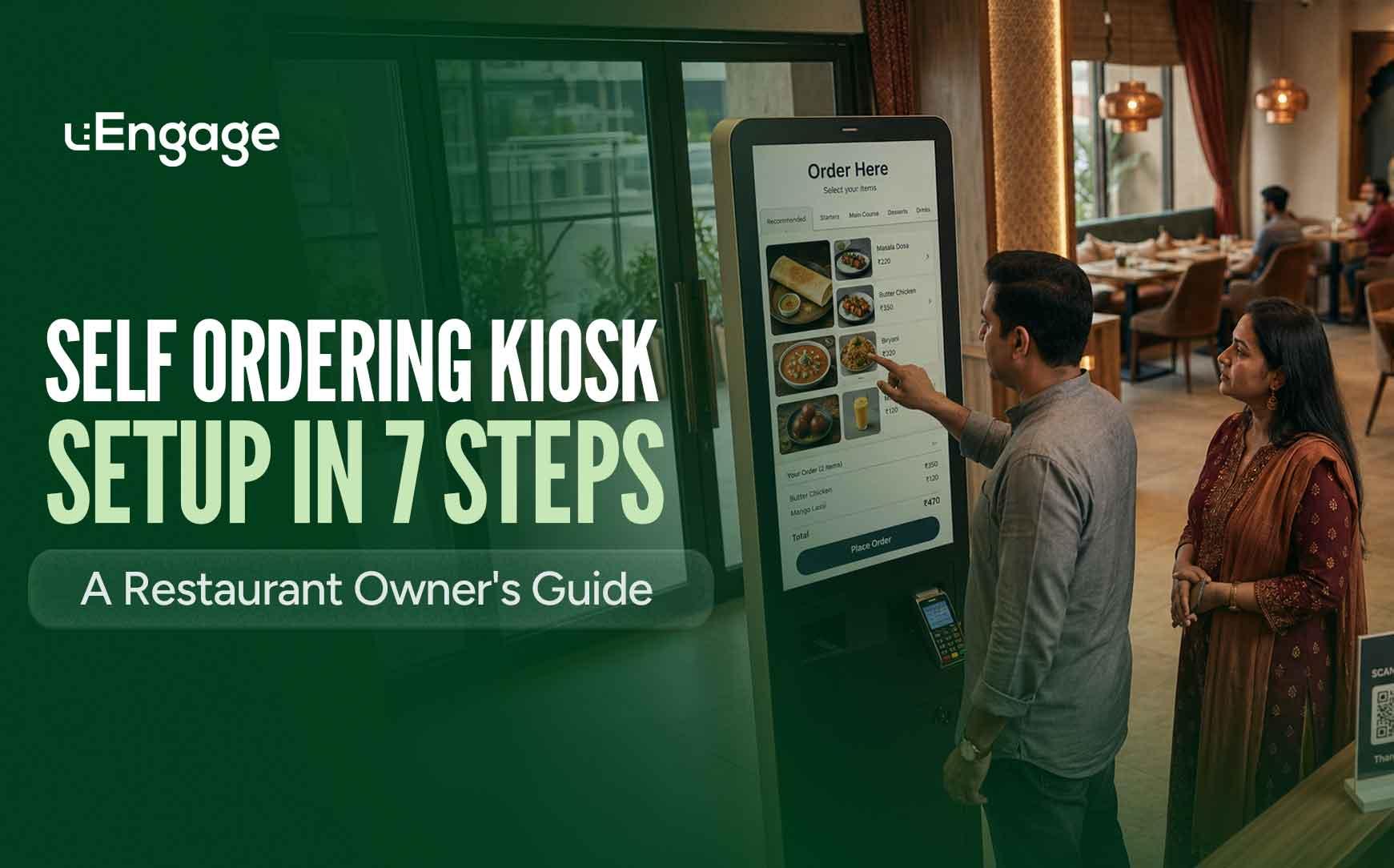
This is exactly why self ordering kiosks in India are becoming a critical part of modern restaurant operations.
From QSR chains and food courts to cafés and corporate cafeterias, restaurant brands across India are adopting self-service ordering technology to improve efficiency and customer experience.
The conversation around a self ordering kiosk often starts with hardware. But successful brands know kiosks are much more than screens.
They are revenue engines, customer experience tools, and operational efficiency systems rolled into one.
The impact can be significant.
One self ordering kiosk deployment achieved:
-
82,000 orders processed
-
2.46 Cr revenue processed
-
18–22% increase in average order value
-
35–45% reduction in queue times
-
88% digital payment adoption
-
Zero order errors reported
The question is no longer whether self ordering kiosks work.
The real question is:
How do you implement them successfully?
This guide breaks down the 7 essential steps every restaurant operator should follow before deploying a self ordering kiosk in India.
Why Restaurants Are Investing in Self Ordering Kiosks in India
Most operators think kiosks are primarily about reducing manpower.
That is only part of the story.
Modern restaurant brands invest in self ordering kiosks because they solve three major operational challenges.
Long Queues During Peak Hours
Customers dislike waiting.
Every additional minute spent standing in line increases the risk of:
-
Order abandonment
-
Customer frustration
-
Lost revenue
-
Poor customer experience
Missed Upselling Opportunities
When staff are managing queues, upselling becomes inconsistent.
Combos, beverages, desserts, and add-ons are often forgotten.
A self ordering kiosk never forgets to recommend an upgrade.
Inconsistent Ordering Experiences
Different staff members recommend different products.
Different locations operate differently.
A restaurant kiosk system helps standardize menus, promotions, and customer journeys across every outlet.
"Technology works best when it removes friction from both the customer experience and restaurant operations."
Step 1: Define the Problem You Want to Solve
Before evaluating kiosk vendors or hardware, identify the business challenge you are trying to solve.
Ask yourself:
-
Are queues becoming a problem?
-
Are customers abandoning orders?
-
Are upselling opportunities being missed?
-
Is staff spending too much time taking orders?
-
Are order errors affecting customer satisfaction?
Different restaurant formats have different priorities.
QSR Chains
Focus on throughput and queue reduction.
Food Courts
Focus on multi-brand ordering and customer flow.
Cafés & Bakeries
Focus on convenience and upselling.
Corporate Cafeterias
Focus on handling high-volume meal periods.
Understanding the problem first helps define the right kiosk strategy.
Step 2: Choose the Right Hardware for Your Self Ordering Kiosk in India
The hardware should support your operational goals.
Common kiosk formats include:
Floor-Standing Kiosks
Best for:
-
QSR chains
-
Food courts
-
High-footfall locations
Countertop Kiosks
Best for:
-
Cafés
-
Bakeries
-
Compact outlets
Dual-Screen Kiosks
Useful for assisted ordering environments where staff may occasionally help customers.
When evaluating hardware, consider:
-
Screen size
-
Durability
-
Payment compatibility
-
Accessibility
-
Maintenance requirements
The goal is not to purchase the biggest kiosk.
The goal is to create the fastest and most efficient ordering experience.
Step 3: Build a Menu That Sells
One of the biggest mistakes restaurants make is treating kiosks like digital menu boards.
The best-performing self ordering kiosks in India use menu design as a revenue growth strategy.
Use Rich Visual Menus
Customers order with their eyes first.
Use:
-
High-quality food photography
-
Clear product descriptions
-
Organized categories
Highlight Bestsellers
Guide customers toward high-performing products.
Promote New Launches
Use banners to promote:
-
Seasonal products
-
New launches
-
Limited-time offers
Create Dynamic Menus
Display different menus based on:
-
Dine-in
-
Takeaway
-
Outlet
-
Time of day
The objective isn't helping customers find products.
The objective is helping customers discover more products.
Step 4: Configure Smart Upselling
This is where many restaurants see the biggest financial impact.
According to restaurant technology studies, automated upselling can significantly increase average order value.
Effective upselling methods include:
Combo Recommendations
Promote complete meal bundles.
Cart Screen Promotions
Present offers at the moment purchase decisions are made.
Modifier Selling
Encourage:
-
Extra cheese
-
Additional toppings
-
Premium ingredients
Meal Upgrades
Suggest larger sizes and premium options.
One kiosk deployment reported an 18–22% increase in average order value after implementing structured upselling flows.
That is why upselling is no longer optional.
It is a revenue strategy.
Step 5: Connect Your POS, Kitchen & Payment Systems
A modern self ordering kiosk in India should never operate in isolation.
Integration is critical.
Your kiosk should connect directly with:
POS Systems
For:
-
Menu synchronization
-
Order management
-
Billing
Kitchen Display Systems
For:
-
Instant order routing
-
Faster preparation
-
Reduced communication gaps
Payment Systems
Support:
-
UPI
-
QR Payments
-
Credit Cards
-
Debit Cards
-
Wallets
The fewer manual handoffs involved, the smoother the operation becomes.
Step 6: Capture Customer Data From Day One
This is the step many restaurant operators overlook.
Most kiosk discussions focus on transactions.
The real long-term value comes from customer ownership.
Modern restaurant ordering kiosks should help collect:
-
Mobile numbers
-
Ordering preferences
-
Visit frequency
-
Purchase behaviour
This enables:
Personalized Marketing
Send targeted offers and promotions.
Every kiosk order should help build your customer database.
Step 7: Measure, Optimize and Scale
Launching a kiosk is only the beginning.
Successful restaurant brands continuously monitor performance.
Track metrics such as:
Average Order Value
Are upselling strategies working?
Queue Reduction
Are customers moving through faster?
Digital Payment Adoption
Are customers using preferred payment methods?
Repeat Usage Rate
Are customers returning?
Peak Hour Performance
How efficiently is the kiosk handling demand?
Continuous optimization separates average deployments from exceptional ones.
Common Mistakes Restaurant Operators Make
Choosing Hardware Before Strategy
Start with business goals first.
Ignoring Upselling Opportunities
Revenue growth often comes from menu design, not hardware.
Not Training Staff
Staff adoption is just as important as customer adoption.
Skipping Customer Data Collection
Without customer data, long-term retention becomes difficult.
Treating Kiosks as Standalone Tools
The most successful deployments integrate kiosks into a broader restaurant technology ecosystem.
How Restaurant Brands in India Are Using Self Ordering Kiosks
Restaurant brands across India are deploying self ordering kiosks to handle peak-hour demand, improve order accuracy, increase average order value, and create faster customer experiences.
The impact goes beyond automation.
It directly influences revenue and operational efficiency.
The Numbers Behind the Shift
82,000
Orders Processed
2.46 Cr
Revenue Processed
300
Average Order Value
18–22%
Increase in Average Order Value
35–45%
Reduction in Queue Times
88%
Digital Payment Adoption
40%
Repeat Usage Rate
Zero
Order Errors Reported
The lesson is simple.
The biggest benefits are not operational.
They are financial.
The Future of Self Ordering Kiosks in India
The future of restaurant ordering is not about replacing people.
It is about removing friction.
The most successful restaurant brands are investing in:
-
QR ordering
-
Customer loyalty
-
Personalized marketing
-
Membership programs
-
Automated customer journeys
As customer expectations continue to evolve, self ordering kiosks in India are moving from a competitive advantage to a business necessity.
Restaurants that invest in self-service ordering today will be better positioned to handle future growth.
Final Thoughts
A self ordering kiosk in india is no longer just a technology upgrade.
It is an operational strategy.
When implemented correctly, it can:
-
Reduce queues
-
Increase order value
-
Improve order accuracy
-
Capture customer data
-
Strengthen customer loyalty
-
Improve restaurant profitability
The restaurants winning today are not simply serving food faster.
They are building smarter ordering experiences.