Walk into any modern QSR today, and one thing is becoming hard to ignore:
Customers no longer want to stand in long queues.
They want:
-
faster ordering,
-
quicker payments,
-
less waiting,
-
and more control over their experience.
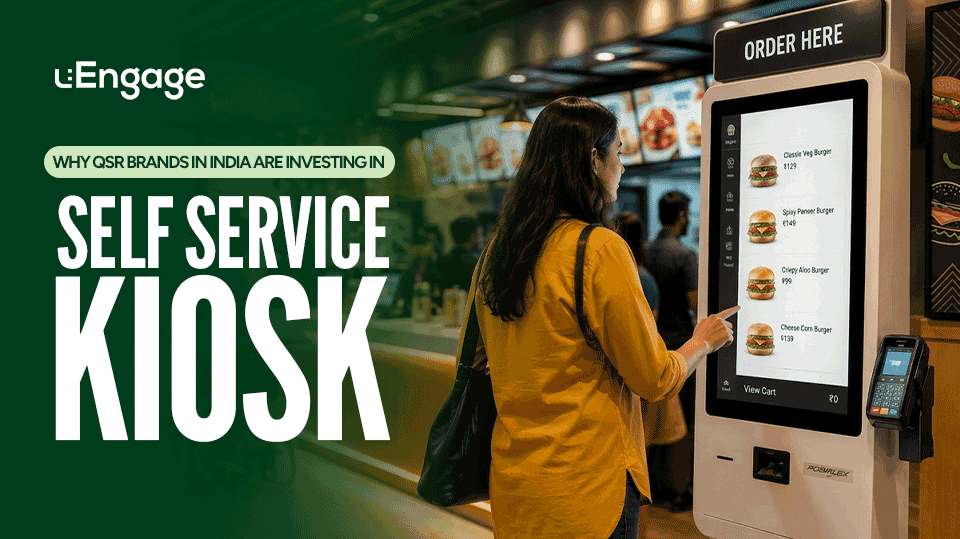
That shift in customer behavior is exactly why self service kiosks in India are becoming a major investment for QSR brands.
And no, this trend is no longer limited to global fast-food chains.
From burger brands and pizza chains to cafes and cloud kitchens, restaurants across India are now exploring self ordering kiosk systems to improve:
-
speed,
-
efficiency,
-
customer experience,
-
and direct ordering operations.
Because in 2026, restaurant growth is not just about getting more customers.
It’s about serving customers faster and smarter.
What Is a Self Service Kiosk for Restaurants?
A self service kiosk is a touchscreen ordering system placed inside a restaurant that allows customers to:
-
browse menus,
-
customize orders,
-
make payments,
-
and place orders independently.
Instead of waiting at counters, customers can complete the entire ordering process themselves.
Modern restaurant kiosk systems often support:
-
QR ordering,
-
digital payments,
-
loyalty integrations,
-
order tracking,
-
and POS connectivity.
In simple terms:
it’s a digital ordering counter designed for speed and convenience.
Why QSR Brands in India Are Rapidly Adopting Self Ordering Kiosks
The QSR industry in India is changing fast.
Today’s customers expect:
-
instant service,
-
digital payments,
-
personalized ordering,
-
and frictionless experiences.
At the same time, restaurants are dealing with:
-
increasing operational pressure,
-
staff shortages,
-
queue management issues,
-
and rising customer expectations.
That’s where self service kiosks for restaurants are helping brands modernize operations.
Benefits of Self Service Kiosks for QSR Brands
1. Faster Ordering Experience
One of the biggest reasons QSR brands invest in kiosks is speed.
Customers can:
-
place orders faster,
-
customize meals easily,
-
and avoid waiting in queues.
This improves:
-
table turnover,
-
customer satisfaction,
-
and operational flow.
Especially during peak hours, kiosk ordering systems help reduce crowding at counters.
2. Higher Average Order Value
Interestingly, customers tend to explore menus more carefully on kiosks.
That often leads to:
-
add-ons,
-
combo upgrades,
-
desserts,
-
and upselling opportunities.
Unlike busy counters, kiosks don’t rush customers.
And that directly impacts revenue.
3. Reduced Counter Pressure
Restaurant staff can focus more on:
-
food preparation,
-
customer assistance,
-
and delivery operations
instead of handling repetitive order-taking tasks.
This creates smoother workflows for QSR teams.
4. Contactless & Digital Payments
Customers today prefer:
-
UPI,
-
cards,
-
wallets,
-
and tap-based payments.
A modern self ordering kiosk for restaurants supports multiple payment methods, making transactions faster and more convenient.
5. Better Order Accuracy
Manual order-taking often leads to:
-
wrong customizations,
-
missed items,
-
and communication gaps.
Kiosks reduce these issues by allowing customers to directly select preferences themselves.
Result?
fewer errors and smoother kitchen coordination.
Why Self Service Kiosks Make Sense for India
India’s restaurant ecosystem is becoming increasingly digital.
Customers are already comfortable with:
-
online ordering,
-
QR menus,
-
UPI payments,
-
and app-based experiences.
That makes adoption easier compared to earlier years.
In fact, many urban QSR brands in India are now treating restaurant automation systems as a long-term business investment instead of an experimental trend.
And honestly…
Once customers experience faster self-ordering, they rarely want to return to long queues again.
Self Service Kiosk vs Traditional Counter Ordering
| Traditional Counter Ordering | Self Service Kiosk |
|---|---|
| Long queues during rush hours | Faster ordering flow |
| Staff-dependent ordering | Customer-controlled experience |
| Manual order errors | Better order accuracy |
| Limited upselling | Smart menu recommendations |
| Slower payment flow | Integrated digital payments |
The goal is not to replace human interaction completely.
The goal is improving operational efficiency where it matters most.
What Features Should Restaurants Look for in a Self Service Kiosk System?
Not every kiosk solution is built for restaurant operations.
QSR brands should look for:
-
fast touchscreen interface
-
POS integration
-
payment gateway support
-
loyalty integration
-
multilingual support
-
combo & customization handling
-
live menu syncing
-
order management dashboard
-
customer analytics
A good kiosk ordering system should fit naturally into restaurant workflows instead of creating operational complexity.
Are Self Ordering Kiosks Worth the Investment?
This is probably the biggest question restaurant owners ask.
Short answer?
For many QSR brands, yes.
Especially if the business struggles with:
-
queue management,
-
peak-hour pressure,
-
repetitive order handling,
-
or customer wait times.
Over time, kiosks help improve:
-
operational speed,
-
customer throughput,
-
and overall ordering efficiency.
And as digital ordering becomes more common in India, early adoption may give brands a competitive advantage.
How Much Does a Self Service Kiosk Cost in India?
The cost of a self service kiosk in India depends on:
-
hardware setup,
-
software capabilities,
-
integrations,
-
and outlet requirements.
Costs may include:
-
kiosk hardware,
-
software subscription,
-
payment integration,
-
and support services.
However, many QSR brands view kiosks as part of their long-term restaurant automation strategy rather than just a hardware expense.
The Future of Restaurant Ordering in India
Restaurant ordering is evolving rapidly.
Today’s customers expect:
-
self-ordering,
-
mobile-first experiences,
-
digital payments,
-
and personalized interactions.
That’s why many modern QSR brands are building integrated ecosystems that combine:
-
self service kiosks,
-
QR ordering,
-
loyalty programs,
-
and direct ordering platforms together.
Because restaurant growth in 2026 is no longer just about food quality.
Experience and convenience now play an equally important role.
Final Thoughts
Self service kiosks are no longer just a “premium feature” for large restaurant chains.
They are becoming a practical operational tool for QSR brands across India.
Because at the end of the day, customers want:
-
faster service,
-
easier ordering,
-
and better experiences.
And restaurants want:
-
smoother operations,
-
higher efficiency,
-
and scalable growth.
That’s exactly why self ordering kiosks are becoming a serious investment in the Indian restaurant industry.