Most restaurants don’t have a food problem.
They have a retention problem.
In fact, one of the most alarming truths in the F&B industry today is this:
Nearly 60% of restaurant customers never return after their first order.
Not because the food was bad.
Not because pricing was wrong.
But because nothing pulled them back.
In 2026, growth is no longer about how many first-time orders you get.
It’s about how many customers come back without discounts.
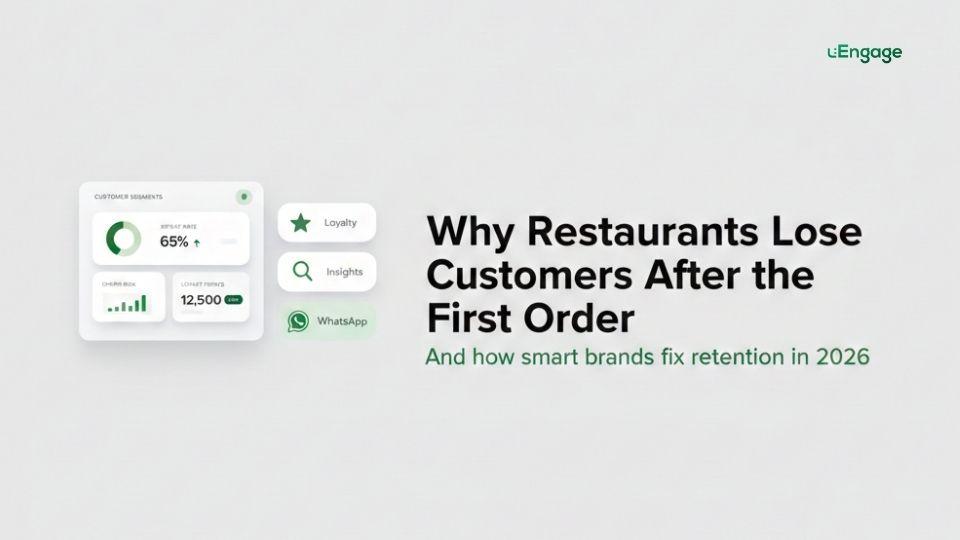
This is exactly why customer retention tools have become the real growth engine for modern restaurant brands.
The Silent Revenue Leak Most Restaurants Ignore
Restaurants spend heavily on:
-
Ads
-
Influencers
-
Aggregators
-
Discounts
But almost nothing on retaining customers after the first order.
Industry reality:
-
Acquiring a new customer costs 5–7x more than retaining an existing one
-
Repeat customers spend 67% more over their lifetime
-
Increasing retention by just 5% can boost profits by 25–95%
Yet most restaurants still treat retention as an afterthought.
“If you don’t follow up with your customers, your competitor will.”
Why Do Restaurants Lose Customers After the First Order?
Let’s break down the real reasons
1. No Post-Order Engagement
After the first order:
-
No thank-you
-
No follow-up
-
No reminder
-
No reason to return
Customers forget your brand faster than you think.
This is where customer retention tools play a crucial role by automating engagement beyond the first transaction.
2. Loyalty Is Still Treated Like Discounts
Most restaurants still rely on:
-
Flat coupons
-
One-time offers
-
Manual WhatsApp messages
These don’t build loyalty.
They build deal-seeking behaviour.
“Discounts attract customers. Loyalty keeps them.”
Smart brands move beyond coupons to structured restaurant loyalty software.
3. No Understanding of Customer Behaviour
Restaurants collect data every day:
-
Orders
-
Frequency
-
Preferences
-
Spend
But most of this data is never used.
Without a customer insights platform, decisions remain guesswork:
-
Who is slipping away?
-
Who is a high-value guest?
-
Who needs re-engagement?
4. Manual Retention Doesn’t Scale
Sending manual messages, tracking repeat visits, or remembering birthdays works for:
-
1 outlet
-
1 manager
But it breaks instantly at scale.
This is why customer retention tools powered by automation are essential in 2026.
What Smart Restaurant Brands Do Differently in 2026
High-growth brands don’t chase customers.
They design systems that bring customers back.
Here’s how
1. They Use Data-Driven Customer Retention Tools
Modern brands rely on customer retention tools that:
-
Track visit frequency
-
Identify drop-offs
-
Segment customers automatically
This allows restaurants to act before customers churn, not after.
2. Loyalty Programs Are Behaviour-Based (Not Generic)
Instead of flat rewards, smart brands use:
-
Points per order
-
Tier-based rewards
-
Bonus points on repeat visits
-
Personalised milestones
Restaurants using structured loyalty programs see 30–40% higher repeat orders within 90 days.
This is where loyalty program software outperforms traditional coupon systems.
3. Automated Retention Campaigns Replace Manual Effort
In 2026, retention runs even when teams don’t.
Smart restaurants use:
-
Re-order reminders
-
Win-back campaigns
-
First-order follow-ups
-
Birthday & anniversary automation
All powered by restaurant marketing automation.
“The best retention campaigns are the ones that run without human effort.”
4. WhatsApp Becomes the Retention Channel
Email is ignored.
Apps are deleted.
WhatsApp gets opened.
That’s why restaurants are shifting retention to:
-
WhatsApp nudges
-
Order reminders
-
Loyalty updates
-
Personal offers
When combined with customer retention tools, WhatsApp becomes a powerful re-engagement channel.
Real-World Example
A growing QSR brand noticed:
-
High first-order traffic
-
Low repeat rate
-
Rising ad costs
After implementing a structured retention system:
-
Repeat orders increased significantly
-
Marketing spend reduced
-
Customer lifetime value improved
The food didn’t change.
The retention strategy did.
How Customer Retention Tools Actually Fix the Problem
Let’s connect the dots
Effective customer retention tools help restaurants:
-
Track every customer journey
-
Identify high-value and at-risk customers
-
Automate personalised communication
-
Reward behaviour, not just spending
-
Build predictable repeat revenue
This turns retention into a system, not a manual task.
Why uEngage Prism Is Built for Retention in 2026
uEngage Prism is designed specifically for restaurant retention complexity.
With Prism, brands get:
-
Advanced customer retention tools
-
Built-in CRM for restaurants
-
Loyalty engine with flexible rules
-
Marketing automation across WhatsApp & SMS
-
Real-time customer insights
Prism helps restaurants move from:
Wrong random offers
to
Right predictable repeat orders
The Bigger Shift Happening in 2026
Restaurants that win in 2026 understand one thing clearly:
“Growth doesn’t come from more customers.
It comes from better relationships.”
Retention is no longer optional.
It’s the foundation of sustainable growth.
And the brands that invest early in customer retention tools are the ones pulling ahead.
Final Thoughts
If your restaurant is losing 6 out of 10 customers after the first order,
the problem isn’t demand.
It’s retention.
In 2026, the smartest brands aren’t asking:
“How do we get more orders?”
They’re asking:
“How do we get customers to come back again and again?”
And that’s exactly what the right customer retention tools are built to do.